

Kids and social media. Ferrari (Cremit-Cattolica): "It is easier to accuse a generation than to stand beside it"
What happened
Pier Cesare Rivoltella founded Cremit.
- To whom
- Cremit
- Kind of action
- Founded, launched or built
- Tone
- Mixed
- When
- Oct 23, 2026
- Reported by
- Riccardo Benotti, Agenzia SIR
Every action it reports: 5
- Cremit published commentary on Messaggio del Papa per la Giornata mondiale delle comunicazioni socialiSaid or cited
- Pier Cesare Rivoltella founded CremitFounded, launched or built
- Cremit is part of Università Cattolica del Sacro CuoreLeads or works for
- Simona Ferrari is director of CremitLeads or works for
"Never as today has our relationship with democracy also passed through the digital." Simona Ferrari, director of the Research Centre on Media Education, Innovation and Technology (Cremit) at the Università Cattolica del Sacro Cuore, traces the history of the centre founded in 2006 by Pier Cesare Rivoltella, on the occasion of the conference "Living with Media: Education, Research and Practices," scheduled for Friday, 23 October in Milan to celebrate its twentieth anniversary.
Cremit turns twenty. Which educational insight has proven most important? The one we owe to Pier Cesare Rivoltella: proposing from the very beginning an educational and cultural approach to technology. Media are not only tools, but also environments and connective tissue.
Skills should not be defined only in technical terms but should adopt the perspective of citizenship: critical thinking, an ethical dimension, democratic participation.
Today we see the same educational urgency with regard to artificial intelligence.
And on what have you had to change your mind? Years ago we emphasized above all the participatory potential of the new "spect-actors" in the social web. Today we observe with concern the powerful and almost unconstrained role of the major platforms, controlled by a few web companies, with new technocratic ideologies that we must not only study but also "watch over," calling them back to an anthropological vision, to social justice, and to sustainability.
(Photo: Cremit)
In an environment where algorithms influence what we see and the opinions we form, how free are we still to choose? We address this question in the days when, in Milan, moral panic spreads through fake news disseminated by unknown accounts and linked to the weekend disorders. Never as today has our relationship with democracy also passed through the digital.
How is this freedom taught? We are working on information literacy in the age of artificial intelligence and algorithms: critical thinking, responsibility for the consequences of one's actions in the digital sphere, and attention to theframework of the information ecosystem.
Educating for freedom means understanding that freedom is not the elimination of every constraint, but adherence to a community that chooses to give itself limits and rules.

This applies to the ethical challenge of artificial intelligence, to the fight against hate speech, and to the responsibility of platforms.
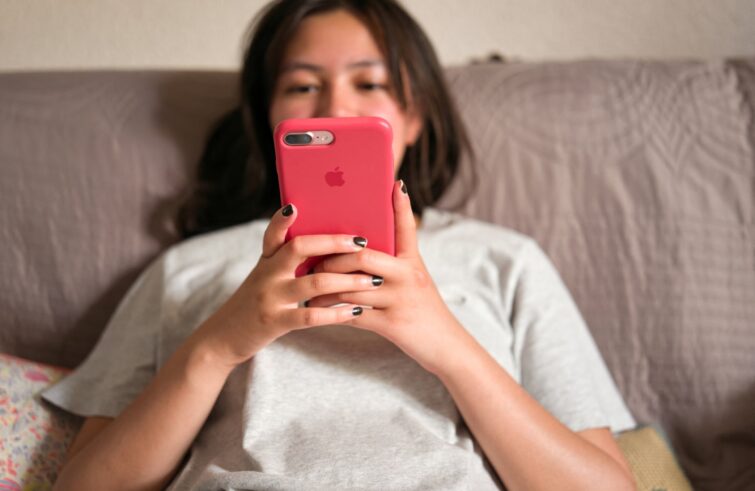
With adolescents, the most immediate response seems to be prohibitions. What emerges from your research? The ban is apparently reassuring. According to the Cisf 2026 Report, 70.1% of parents favor banning smartphones at school, even for educational purposes. According to UNESCO's 2026 Global Education Monitoring Report, 114 national education systems, 58% of the countries in the world, have introduced restrictions or prohibitions, while in 2023 fewer than a quarter had done so.
What concerns you about this trend? The idea that the problem is solved by "phones out of school": in this way the largest educational agency takes a step back, leaving education on the shoulders of families and young people themselves. Often, moreover, the ban comes with blaming judgments toward the very young.
Are we at risk of concealing adults' responsibilities? The logic of "us versus them" is not truthful, because in digital behavior the gap between adults and minors is increasingly narrow, and it leads to separation and conflict. Education, instead, creates relationship, dialogue, and coexistence.
It is simpler to accuse a generation than to stand alongside and accompany it, or to join together to ask the major web companies for limits on hate speech and on the persuasive design and addictive mechanisms with which social platforms capture attention.

With artificial intelligence, students complete in seconds tasks that once required hours. What changes for schools? First of all, artificial intelligence is also used by adults, including us teachers. A new literacy is needed for everyone. We are developing research on how teaching skills, from design to assessment, are being challenged by artificial intelligence and under what conditions they must change. As the 2026–2028 Strategic Plan of our university outlines, artificial intelligence is not merely a technological innovation but a cultural, educational, and epistemological challenge.
The conference also devotes space to the relationship between media education and pastoral care. What path have you shared with the Church? From the beginning, Cremit has included on its Scientific Committee the director of the Italian Episcopal Conference's National Office for Social Communications, collaborating with dioceses, oratories, schools, and religious families. In 2006 parish websites and blogs were born, along with the first social media profiles: it was the recognition of the digital as a space to inhabit also for pastoral action. Since then we have shared with the Office MOOCs, research, and the series of annual volumes commenting on the Pope's Message for the World Day of Social Communications.
What is at stake today for the Church?
For the Church, communicating is not one possibility among others, but a constitutive dimension of its very mission.
An even more important responsibility in the post-digital context, in which media are no longer tools separate from everyday life, but intertwine with the environments we inhabit, our experiences, and relationships among people.